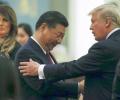
'While many Chinese policy makers dismiss the political, economic and technological component of US-India relations, they express caution on the defence-related ties which also happens to be a major driver in US-India relations,' explains China expert Srikanth Kondapalli.

The six satellites will be launched on PSLV-C29 from the Satish Dhawan Space Centre in Andhra Pradesh on December 16, 2015.

'This is the first time the US has formally recognised the threat India faces from terrorist organisations based in Pakistan.'
Did you know that 17% seats are reserved for girl students in every branch of engineering?

This is the first visit by diplomats to the newly carved out UT.

India has an unprecedented opportunity to develop solar industry because like China, it offers scale which is critical to reducing costs and to stimulate innovation, says Shyam Saran.

Although residential sales faced a major set back in Q2, they made a comeback with help of pent up demand.
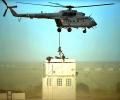
'While US officials understand and accept India's desire for retaliation, they still don't want to encourage steps that would likely lead to war.'

'If the dimensions of the strategic partnership worked out by India and the US seem like a grand alliance targeted at you-know-who, China had better realise that it has fathered it,' says B S Raghavan, a long time observer of China.

Rediff.com present a comprehensive listing of the nuclear nations and their collective and active stockpile.

'India does not wish to remain silent in improving its strategic space so that its leverage to counter China's expansionist designs is maintained, besides enabling it to play a responsible role from a position of strength for peace and stability in Asia,' points out Dr Rajaram Panda.

'Over the last two decades, the India-French relationship has grown steadily, no major political difference having darkened the sky between Paris and Delhi,' says Claude Arpi.
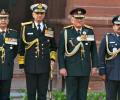
As India's international role expands, so must our capabilities, says Brigadier Gurmeet Kanwal (retd).

Subrahmanyam Jaishankar's worldview sets him apart

If Indian PM boycotts the CHOGM, it is likely to add to Sri Lanka's bitterness. This would not help India's desire to add more depth and content to its relations with Sri Lanka but its ability to influence Sri Lanka's decision making process on the both strategic issues and on Tamil minority issues, says Colonel (retd) R Hariharan.

Diplomats agree that amid stormy relations with China and Pakistan, Modi has posted impressive foreign policy successes, notes Aditi Phadnis.

'During his visit to Vietnam on September 3 -- the first visit by an Indian prime minister in 15 years -- Modi will notice the widespread anti-China sentiment in that country.'

In the light of India's increasingly 'darkening' threat environment and the convergence of strategic interests between China and Pakistan, the IAF's declining combat capabilities are a cause for concern, says Brigadier Gurmeet Kanwal (retd).

'By extending its support to the LeT, China is not helping the cause of containment and eventual destruction of radicalism and terror.'
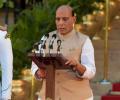
The new minister must commit himself to supporting long-term defence plans or else defence modernisation will continue to lag and the growing military capabilities gap with China will assume ominous proportions, warns Brigadier Gurmeet Kanwal (retd).

'What we are actually missing in India is a platform wherein the government engages with cybersecurity experts, gets them employed and then utilises their capability to deter such attacks.'
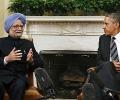
A federal body began a hearing on the impact of Indian trade policies on US businesses wherein American bodies and advocacy groups slammed India for its trade practices, alleging they hit their jobs and business.
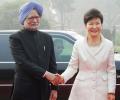
South Korean President Park Geun-hye's visit to India will enhance economic and military ties between the two countries and give the relationship a strategic dimension, says Jiye Kim.

He said India can have a possible role in creating a multilateral forum of negotiations between the Palestinians and Israelis.
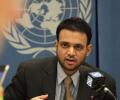
The 36-year-old desi speaks impeccable Arabic and quotes freely from the Quran during his speeches, reports Aziz Haniffa.
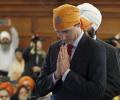
'The India-Canada relationship has suffered benign neglect. Its full potential has not yet been realised,' says Rup Narayan Das.

'The strategy has to be restoring order in one part and countering the very effective propaganda through a very nimble monitoring and response system,' says Lieutenant General Syed Ata Hasnain, who retired as the General Officer Commanding of the Srinagar-based 15 Corps.

Chinese President Xi Jinping's visit to India is a time for the two countries to get away from the haze of rhetoric and stale euphoria, says Sana Hashmi.

'This novel format of diplomacy -- the informal summit -- will not only facilitate bilateral communication and reduce miscalculations at the very top level of the two governments, but possibly open the space for China and India to speak in one voice on various issues of mutual concern,' note Feng Renjie and Ding Kun Lei
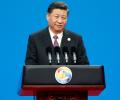
'Chinese companies have acquired stakes in 13 ports in Europe, including in Greece, Spain and, most recently, Belgium.' 'Those ports handle about 10 percent of Europe's shipping container capacity,' points out Ambassador M K Bhadrakumar.

Asserting that "maritime muscle flexing" by some countries and other factors have made the Indo-Pacific region "more contested and more volatile," naval chief Admiral Sunil Lanba on Tuesday said that the Indian Navy has its task cut out as it has been a major security provider in the region.
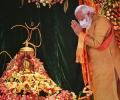
'Although Narendra Modi had no direct participation in the Ayodhya agitation, he would not have been in the dominant position he is now had it not been for the Ram Janambhoomi agitation.'

'Pakistan will try to escalate covert operations through terrorism,' says Dr Shalini Chawla.
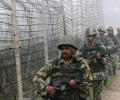
'For every act of terrorism on Indian territory for which there is credible evidence pointing to the Pakistan army and the ISI's involvement, carefully calibrated military strikes must be launched against the Pakistan army,' says Brigadier Gurmeet Kanwal (retd).

This is the first time Pakistan and Kashmir have been brought into the narrative.

'Building on the potential for closer ties is the changing narrative in each country about the other. The Chinese narrative on India has become significantly more positive over the past few years,' says Walter Andersen and Zhong Zhenming.

India's full membership of the grouping would extend its reach to the Central Asian region in whose peace and stability it is a major stakeholder, says Sana Hashmi.

We must see New Delhi's position as a signal of competition to the Chinese grand design for the 21st century world, says Nitin Pai.


Former Watson Fellow and social entrepreneur Srikar Gullapalli talks about the issues affecting India's growth and tells us why he wants more people to actively participate in building a bright future and put India on the global map.
